Science and the Bible: Areas of Harmony and Tension
The relationship between science and the Bible has long been a subject of debate. Some argue that the two are inherently in conflict, while others see them as complementary. In this article, we will explore the areas where science and the Bible align, as well as points of tension.
Areas of Harmony
- The Material Universe: Both science and the Bible affirm that the material universe exists and can be studied. The book of Genesis describes God’s creation of the universe, while modern science seeks to understand its workings.
- Law and Order: The Bible emphasizes the importance of order and law in the cosmos, a concept echoed by the laws of physics discovered through scientific investigation.
- Humanity’s Role: Both the Bible and science view humanity as having a unique role in the universe. The Bible portrays humans as being created in God’s image, while modern science sees humanity as a unique and complex species capable of understanding and shaping the world around us.
Points of Tension
Despite these areas of harmony, there are also points where science and the Bible appear to contradict one another. These points often arise from differing perspectives, goals, and methods.
- Timeline of Creation: The timeline of events in Genesis differs significantly from the timeline suggested by modern science, particularly regarding the age of the Earth and the process of evolution.
- Interpretation of Miracles: The Bible describes many events as miracles, which are often seen as violations of natural laws. However, these events are not observed or reproducible in the scientific method, leading to tension between faith and reason.

The Role of Faith and Reason
It is important to note that many scientists, including those at the top of their fields, are people of faith. They do not see science and the Bible as inherently in conflict but rather as complementary systems of understanding the world.
Conclusion
In conclusion, the relationship between science and the Bible is complex and multifaceted. While there are points of tension, there are also areas of harmony and complementarity. By understanding these aspects, we can deepen our appreciation for both science and the Bible, and the insights they offer into the mysteries of the universe.
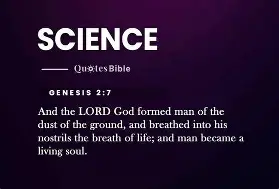
Lesson Summary
- Areas of Harmony: Both science and the Bible affirm the existence and study of the material universe, the importance of order and law, and humanity’s unique role.
- Points of Tension: These often arise from differing timelines, interpretations of miracles, and methods of understanding the world.
- Role of Faith and Reason: Many scientists are people of faith and do not see science and the Bible as inherently in conflict but rather as complementary systems of understanding the world.