
Biblical View on Creation and Humanity Origins
Introduction
In this study guide, we will explore the biblical account of creation and humanity’s origins. We will discuss the Christian perspective on evolution, and how it aligns with the Genesis narrative. By understanding both scientific theories and the Scriptural context, we can arrive at a holistic view that strengthens our faith rather than challenges it.
Understanding Evolution
It is essential to clarify the concept of evolution before discussing its relationship with biblical accounts. Scientific evolution refers to changes in the gene pool over time, gradually producing offspring with different genetic makeup, rather than a change in an individual organism or the linear progression of a species as commonly portrayed.
Biblical Account of Creation
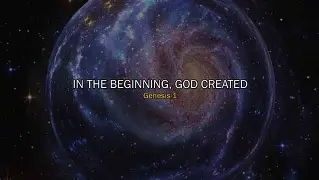
The biblical account of creation found in Genesis presents God as the creator who formed everything in six literal days. This narrative emphasizes the glory of God as the Creator, and it is crucial to read the text at face value without incorporating scientific or philosophical interpretations.
The Relationship Between Evolution and Creation
- Both Science and Theology Agree on a Common Ancestor: While the mechanisms might differ, both science and theology acknowledge a common ancestor for all life forms.
- Evolution Does Not Disprove the Existence of God: Evolution is a process by which God created and shaped the diversity of life on Earth. It does not contradict the belief in a creator.

Humanity’s Origins According to the Bible
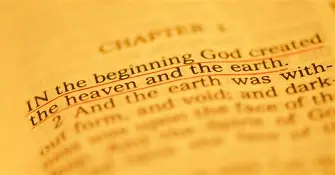
The biblical account of humanity’s origins can be found in Genesis chapters 1-3. Adam, the first man, was created by God from the dust of the ground and given life. Eve, the first woman, was formed from Adam’s rib. This narrative emphasizes that humanity is a unique creation made in the image of God.
The Implications of Interpreting Genesis
Misunderstandings regarding the interpretation of Genesis can lead to controversy. It is essential to approach Scripture with an open mind, allowing it to speak for itself without imposing external interpretations based on science, philosophy, or worldviews.
Conclusion
By understanding the biblical account of creation and humanity’s origins, as well as the scientific theory of evolution, we can appreciate the interconnectedness between science and faith. This holistic view strengthens our belief in God as the creator of all things and serves to deepen our understanding of Scripture.

Additional Resources
- Video: Can a Christian Believe in Evolution?
- Video: John MacArthur, R.C. Sproul – What is the Biblical view of creation in Genesis? Q&A
Lesson Summary
In this study guide, we discussed the biblical account of creation and humanity’s origins. We clarified the concept of evolution and its relationship with the Genesis narrative. It was emphasized that both science and theology acknowledge a common ancestor for all life forms and that evolution does not contradict belief in a creator. Additionally, it is crucial to approach Scripture without imposing external interpretations based on science, philosophy, or worldviews.