Doctrine of Salvation: Faith and Works in James and Paul

Introduction
In this article, we will explore the doctrine of salvation as presented by the apostles James and Paul in their respective letters. We will delve into the teachings on faith and works to gain a deeper understanding of how these two aspects intertwine in the biblical context.
The Teachings of James
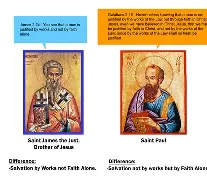
The Epistle of James emphasizes the importance of demonstrating one’s faith through works. In James 2:14-26, we find a passage that highlights this idea:
- What good is it, my brothers and sisters, if someone claims to have faith but has no deeds? Can such faith save them?
- Suppose a brother or sister is without clothes and daily food. If one of you says to them, “Go in peace; keep warm and well fed,” but does nothing about their physical needs, what good is it?
- In the same way, faith by itself, if it is not accompanied by action, is dead.
- But someone will say, “You have faith; I have deeds.” Show me your faith without deeds, and I will show you my faith by what I do.

The Teachings of Paul
In contrast, the Apostle Paul emphasizes justification by faith alone. In Romans 3:21-31, we find a passage that highlights this idea:
- But now apart from the law the righteousness of God has been made known, to which the Law and the Prophets testify. This righteousness is given through faith in Jesus Christ to all who believe.
- There is no difference between Jew and Gentile, for all have sinned and fall short of the glory of God.
- And they are justified freely by his grace through the redemption that came by Christ Jesus.
- God presented Christ as a sacrifice of atonement, through the shedding of his blood—to be received by faith. He did this to demonstrate his righteousness, because in his forbearance he had left the sins committed beforehand unpunished
- He did it to demonstrate his righteousness at the present time, so as to be just and the one who justifies those who have faith in Jesus.
Reconciling Paul and James
While it may seem that the teachings of James and Paul are in conflict, a closer examination reveals that they are not.
- James does not say that faith alone is insufficient for salvation; rather, he emphasizes the importance of demonstrating one’s faith through works.
- Paul does not teach that works are unnecessary for salvation. Instead, he teaches that justification—the legal declaration of righteousness—comes by faith in Jesus Christ alone.

Conclusion
The teachings of James and Paul on the doctrine of salvation serve to complement each other. Salvation is a gift from God, received by faith in Jesus Christ (Paul), and this faith must be demonstrated through good works (James). By understanding and applying these teachings, we can strive for holiness and live lives that bring glory to God.
Lesson Summary
- James emphasizes the importance of demonstrating faith through works.
- Paul teaches justification by faith alone in Christ.
- Both teachings complement each other: Salvation is a gift received by faith, and this faith must be demonstrated through good works.