The Tabernacle vs the Temple: Spiritual Symbolism
In this article, we will explore the spiritual symbolism of the tabernacle and the temple in the Bible. We will focus on their respective designs, functions, and significance within the Old Testament context.
The Tabernacle
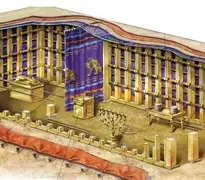
The tabernacle was a portable, temporary structure that the Israelites constructed according to God’s instructions given to Moses (Exodus 25-40). It served as a dwelling place for God among His people during their wanderings in the wilderness.
Design and Function
- The tabernacle was made following precise instructions from God, emphasizing its divine design rather than human innovation.
- It consisted of three main sections: the outer court, the holy place, and the most holy place. Each section had specific furniture and functions.
Symbolism
The tabernacle’s design and function symbolized various spiritual truths, including God’s presence among His people, sacrificial offerings, and the need for purification and cleansing.

The Temple
Unlike the tabernacle, the temple was a stationary structure built by King Solomon in Jerusalem (1 Kings 5-8). It served as the central place of worship for the Israelites after they settled in the Promised Land.
Design and Function
- The temple was patterned after the tabernacle but had some differences, such as being more elaborate and permanent.
- It consisted of several courtyards, the holy place, and the most holy place. Each area had specific furniture and functions, similar to the tabernacle.
Symbolism
The temple’s design and function symbolized God’s dwelling among His people, as well as their need for purification and atonement through sacrifices.
Comparison: Tabernacle vs Temple
Though the tabernacle and temple had some similarities, they also had distinct differences in design, function, and symbolism. These variations highlight their unique roles within the Old Testament narrative.

Jesus in the Old Testament: Tabernacle and Temple Typology
Some scholars see connections between Jesus, the tabernacle, and the temple. For instance, they suggest that Jesus is the ultimate fulfillment of both structures’ spiritual symbolism.

Conclusion
The tabernacle and temple were crucial elements in the Old Testament, each symbolizing God’s presence among His people and providing a means for atonement. Understanding their differences and similarities can deepen our appreciation for these structures and enhance our study of the Bible.
Lesson Summary
- The tabernacle was a portable, temporary dwelling place for God among His people during their wanderings in the wilderness. It consisted of three main sections: the outer court, the holy place, and the most holy place.
- The temple was a stationary structure built by King Solomon in Jerusalem, serving as the central place of worship for the Israelites after they settled in the Promised Land.
- Both structures symbolized God’s presence among His people and provided a means for atonement through sacrifices. However, their differences highlight unique aspects of Old Testament history and spirituality.
- Some scholars see connections between Jesus, the tabernacle, and the temple, suggesting that Jesus is the ultimate fulfillment of both structures’ spiritual symbolism.