The Geography of the Holy Land: Key Biblical Locations
Introduction
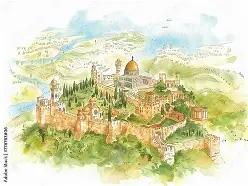
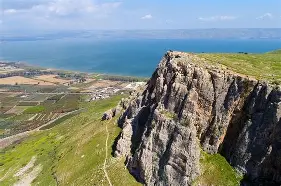
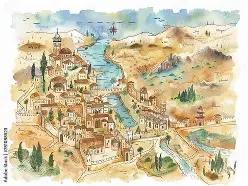
The Holy Land, now known as Israel and Palestine, plays a central role in the sacred texts of Judaism, Christianity, and Islam. This article provides an overview of key biblical locations in the Holy Land.
Bethlehem
Bethlehem, a small town located in ancient Israel, is traditionally considered the birthplace of Jesus (Luke 2:4-7). Despite common misconceptions, Jesus was not born in a stable but rather in a cave, which was typical for Bethlehem’s houses.
Journey of the Magi
- The Magi did not visit Jesus at his birth but rather came later to ask King Herod about the newborn king (Matthew 2:1-8).
- Herod ordered the murder of all male children under two in Bethlehem, fearing that the new king would take away his power.
The Coast of Dor
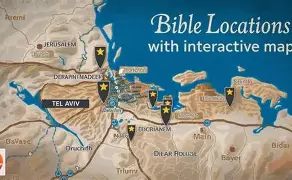
The coast of Dor is a small region situated between the Mediterranean Sea in the west, Mount Carmel in the north and east, and the river Tainanim (Crocodile River) and the plain of Charon in the south. This area was part of the tribal allotment of the tribe of Manasseh but could not be fully conquered by the Jews (Joshua 17:11-12; Judges 1:27).
Travel Routes
Due to the swampy nature and narrowness of the coastal route, most travelers avoided it and instead traveled inland through Mount Carmel.
Conclusion
Understanding the geography of the Holy Land provides valuable context for studying the Bible. Key biblical locations such as Bethlehem and the Coast of Dor offer insights into the lives of important figures in Jewish, Christian, and Islamic history.
Lesson Summary
- Jesus was born in Bethlehem, not in a stable but rather a cave.
- The Magi came to ask King Herod about the newborn king, which led to the murder of many male children in Bethlehem.
- The coast of Dor is a region situated between the Mediterranean Sea and Mount Carmel that was part of the tribal allotment of the tribe of Manasseh but could not be fully conquered by the Jews.