Understanding the Difference between Kairos and Chronos Time
Introduction
In this article, we will explore the concept of Kairos and Chronos time within the context of Christian spirituality. By understanding these distinct concepts of time, we can gain a deeper appreciation for the richness and complexity of Biblical teachings on time.
Chronos Time: Linear and Measurable
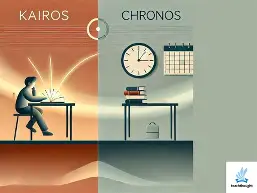
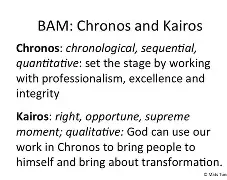
Chronos is a Greek word that gives us all our time-related words such as chronology and chronological. It represents sequential, linear, measurable time – the kind of time that marches on, that keeps on ticking, that waits for no one (e.g., clocks and calendars). We live on Chronos time.
Kairos Time: Eventful and Qualitative
In contrast, Kairos is a word that occurs 85 times in the New Testament. It represents time measured qualitatively – over a season, across an eon, or at the appointed time or moment. Kairos is about the significance of events and moments rather than their quantitative duration.
Kairos vs Chronos: A Christian Perspective
- In a Christian document from the 100s called the Didache, the author wrote, “Gather together enthusiastically seeking those things beneficial to your souls for the whole Chronos of your faith won’t profit you unless you’re perfected in the Kairos.” This shows that our faith on earth is formed in Chronos time but its significance is felt in heavenly time, which is Kairos.
- In the modern West, we tend to think of time as a linear, measurable commodity. However, many cultures have different concepts of time, such as the Amazonian rainforest people who have no concrete concept of past or future, and the Hopi Indians who have only two words for ‘sooner’ and ‘later’ in their entire vocabulary.
Conclusion
By understanding the difference between Kairos and Chronos time, we can gain a deeper appreciation for the richness and complexity of Biblical teachings on time. We can learn to appreciate the significance of events and moments in our lives, rather than simply focusing on their quantitative duration.

Lesson Summary
* Kairos is a Greek word that represents time measured qualitatively, focusing on the significance of events and moments.
* Chronos is a Greek word that represents sequential, linear, measurable time – the kind of time that marches on, that keeps on ticking, that waits for no one (e.g., clocks and calendars).
* In Christian spirituality, our faith on earth is formed in Chronos time but its significance is felt in heavenly time, which is Kairos.
* Many cultures have different concepts of time, such as the Amazonian rainforest people who have no concrete concept of past or future, and the Hopi Indians who have only two words for ‘sooner’ and ‘later’ in their entire vocabulary.
Questions and Further Study
1. How can understanding the difference between Kairos and Chronos time enrich your spiritual journey?
2. Research other cultures’ concepts of time, and how this understanding affects their daily lives.