The Importance of Verb Tenses in the Greek New Testament
Introduction
This article aims to shed light on the significance of verb tenses in the Greek New Testament. We will explore how different verb tenses contribute to understanding and interpreting the text accurately.
Development
Understanding Verb Tenses
In Greek, verbs are aspect-prominent rather than tense-prominent like in English. While tense tells us about the time of an action, aspect relates to the kind or nature of the action. Only within the indicative mood does tense matter for understanding the verb’s relationship to time.
The Importance of the Imperfect Tense
The imperfect tense is used most frequently in narrative literature in the New Testament. As seen in the video, it occurs more than 1500 times in Matthew through Acts but only around 183 times in Romans through Revelation. This tension between narrative and non-narrative sections highlights the importance of understanding the imperfect tense for a comprehensive study of the New Testament.
Aspect vs Tense
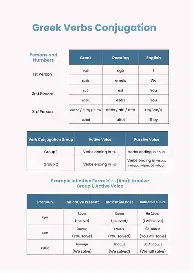
Greek verbs in the indicative mood will manifest both tense (verb’s location in time) and aspect (the kind of action). The attached prefix of an augment to the verb stem indicates the verb in the indicative mood is conveying past tense or past verb time.
The Role of Verb Tenses in Interpretation
Accurate interpretation of the New Testament relies on a deep understanding of verb tenses. Verb tenses can convey action that is ongoing, repeated, continuous, or completed, all of which have significant implications for biblical study and theology.
Conclusion
Acknowledging the importance of verb tenses in the Greek New Testament is essential for accurate interpretation and understanding. By examining the imperfect tense as a case study, we can appreciate the nuanced meanings that verb tenses contribute to our study of this sacred text.
Lesson Summary
– Greek verbs are aspect-prominent, whereas English is tense-prominent.
– The imperfect tense is most frequently used in narrative literature of the New Testament.
– Understanding verb tenses is crucial for accurate interpretation and theology.
– Greek verbs in the indicative mood manifest both tense and aspect.
Additional Resources
– Wallace, Daniel B. (1996). Greek Grammar Beyond the Basics: An Exegetical Syntax of the New Testament. Zondervan.
– Brixcher, Braden. (2020). New Testament Greek Verbs: Tense and Aspect [Video]. YouTube. Retrieved from https://www.youtube.com/watch?v=8X5cZxwFKfA
References
– Brixcher, Braden. (2021). Use of the Greek Imperfect Tense in the New Testament [Video]. YouTube. Retrieved from https://www.youtube.com/watch?v=x7XQ95_nV3E
– Wallace, Daniel B. (1996). Greek Grammar Beyond the Basics: An Exegetical Syntax of the New Testament. Zondervan.