
Introduction: Exploring Justification by Faith in the Book of Romans
The apostle Paul’s Letter to the Romans is one of the most significant works in Christian literature. In this article, we will delve deep into the topic of justification by faith, focusing particularly on chapters 3 and 4 of Romans.
Background: The Context of Romans
Paul wrote his Letter to the Romans around A.D. 56-57 during his third missionary journey (Acts 18:23). At that time, the Roman Church was divided due to disagreements about how to follow Jesus, with debates over issues such as celebrating the Sabbath and eating kosher.

Justification by Faith: A Theological Conundrum
In chapters 3 and 4 of Romans, Paul addresses the question of how sinners can be justified, or declared righteous, before God. This issue was crucial for both Jewish and Gentile followers of Jesus, as they sought to understand their standing with God in light of their sin.
Unpacking Justification by Faith (Romans 3:19-28)
- Verse 20: Paul declares that there is no distinction between Jew and Gentile, as all have sinned and fall short of the glory of God.
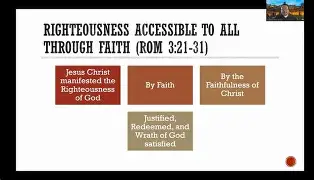
- Verses 21-22: Through faith in Jesus Christ, God has declared righteous those who believe. This righteousness comes through faith from first to last, and is a gift that is apart from works of the law.
- Verse 23: All have sinned and fall short of the glory of God, but all are justified freely by his grace through the redemption that came in Christ Jesus.
- Verse 25-26: God’s righteousness is revealed apart from works of the law, as it is attained through faith in Jesus Christ. This righteousness is given through the redemption that came in Christ Jesus.
The Role of Faith (Romans 4:1-8)
Paul continues his discussion on justification by faith in chapter 4, using Abraham as an example. He emphasizes that Abraham was justified not by works but through faith.
Abraham’s Justification by Faith (Romans 4:9-25)
- Verses 9-10: Abraham did not receive circumcision until he was already declared righteous. He received circumcision as a sign, not to create righteousness.
- Verses 11-12: Abraham and his descendants were not justified by works of the law but through the righteousness that comes by faith.
- Verses 13-17: David, a man after God’s own heart, testified that he delighted in God’s commands. However, his actions did not justify him. Rather, it was through faith that his sins were forgiven.
- Verses 21-25: If Abraham was justified by works, he had something to boast about, but he declared, “But the righteous man lives by faith.” David, too, declares this truth in Psalm 32.
Lesson Summary
In our study of Romans, we have seen how Paul addresses the issue of justification by faith. He emphasizes that all are sinners and fall short of God’s glory but can be justified freely by his grace through the redemption in Christ Jesus. Abraham serves as an example of one who was justified by faith, not by works.

Reflecting on Justification by Faith
As we continue to study the Bible and seek to follow Jesus, let us remember that our justification comes through faith in Christ, not through works of the law. We can take comfort in this truth as we strive to live out our Christian lives.

Application
How does your understanding of justification by faith impact the way you view yourself and others? How might this truth transform your interactions with those around you, both within and outside the church? Consider these questions as you continue to grow in your faith.

Prayer
Lord, thank you for the gift of salvation that comes through faith in Jesus Christ. Help us to understand this truth more deeply and live it out in our lives. May we share this message of grace with those around us and see Your kingdom grow.