
Ancient Babylonian Culture and the Tower of Babel
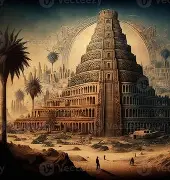
Historical Overview of Ancient Babylon
Babylon, meaning “Gate of God,” originated as a small settlement around 3000 BC, but it gained significance in the early second millennium BC. Nestled between the Tigris and Euphrates rivers, Babylon benefited from its strategic location at the crossroads of trade routes and irrigation canals.

The Rise and Fall of Babylon
The city-state of Babylon rose to prominence during the late 2nd millennium BC, after a period of fragmentation following the collapse of the Akkadian Empire. It reached its zenith under Nebuchadnezzar II in the 6th century BC, becoming one of the greatest cities in history.
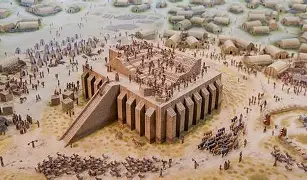
The Tower of Babel
The story of the Tower of Babel appears in the Book of Genesis as an account of the people of Babylon attempting to build a tower that would reach heaven. The purpose of this tower is not explicitly stated, but it is often interpreted as an act of hubris or an attempt to create a unified humanity.

Babylonian Mathematics and the Tower of Babel
Recent discoveries suggest that Babylonian mathematicians had a deep understanding of geometry, particularly Pythagorean triples. These triangles are sets of three numbers for which the square of the longest side is equal to the sum of the squares of the other two sides.

Biblical Interpretations and Modern Perspectives
The story of the Tower of Babel has been interpreted in various ways throughout history, with some seeing it as a cautionary tale about human hubris and others viewing it as an explanation for the diversity of languages.

Lesson Summary
- Ancient Babylon was a powerful city-state located between the Tigris and Euphrates rivers.
- The story of the Tower of Babel appears in the Book of Genesis and is often interpreted as an act of hubris or an attempt to create a unified humanity.
- Recent discoveries suggest that Babylonian mathematicians had a deep understanding of geometry, particularly Pythagorean triples.