Roman Roads and the Spread of Early Christianity

Introduction: Judaism and Messianic Traditions
To appreciate Christianity’s rise, it is essential to understand Judaism. Jesus was a Jew who grew up in the Jewish tradition. He was one of several teachers spreading their ideas within the Roman province of Judea during his time.
The Spread of Judaism and the Birth of Christianity
Jesus belonged to a messianic tradition, which provides insight into why he was considered not only a teacher but something more profound. The Jewish religion had long been monotheistic, with a covenant between God and Abraham serving as a central concept.
The Covenant with Abraham
In the book of Genesis (Chapter 17), when Abram was 90 years old, he had a conversation with God that laid the foundation for the covenant. This divine agreement formed the basis for understanding the Jews and their faith.
The Role of Roman Roads
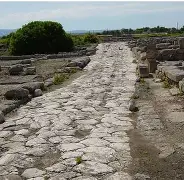
The success of Christianity as a global religion was not solely due to theology but also the Roman Empire’s influence, infrastructure, and connectivity.
The Impact of Alexander the Great
Alexander the Great played a significant role in spreading Hellenistic culture across the Eastern Mediterranean. However, it was Rome that built the system that allowed movements to scale.
Roman Roads as Arteries of Christian Expansion
Paul of Tarsus, an educated Jew fluent in Greek and a Roman citizen, used the Empire’s infrastructure to spread Christianity. His missionary journeys mirrored Roman trade routes, his epistles followed postal channels, and he preached in major Roman cities.
Conclusion: The Geopolitical Context of Early Christianity
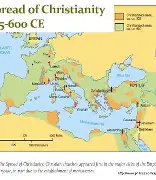
Christianity’s growth and spread were facilitated by the Roman Empire, not just through military might but also through systems, infrastructure, and connectivity. Understanding this geopolitical context provides valuable insights into the early history of Christianity.
Lesson Summary
- Understanding Christianity requires an appreciation of its Jewish roots.
- Jesus was part of a messianic tradition, which set him apart as more than just a teacher.
- The Roman Empire played a crucial role in the spread of early Christianity through its infrastructure, such as the extensive road network.
- Paul of Tarsus leveraged Roman systems to spread Christianity effectively, preaching in major Roman cities and using postal channels for his epistles.

Further Reading
For more information, we recommend the following resources: